
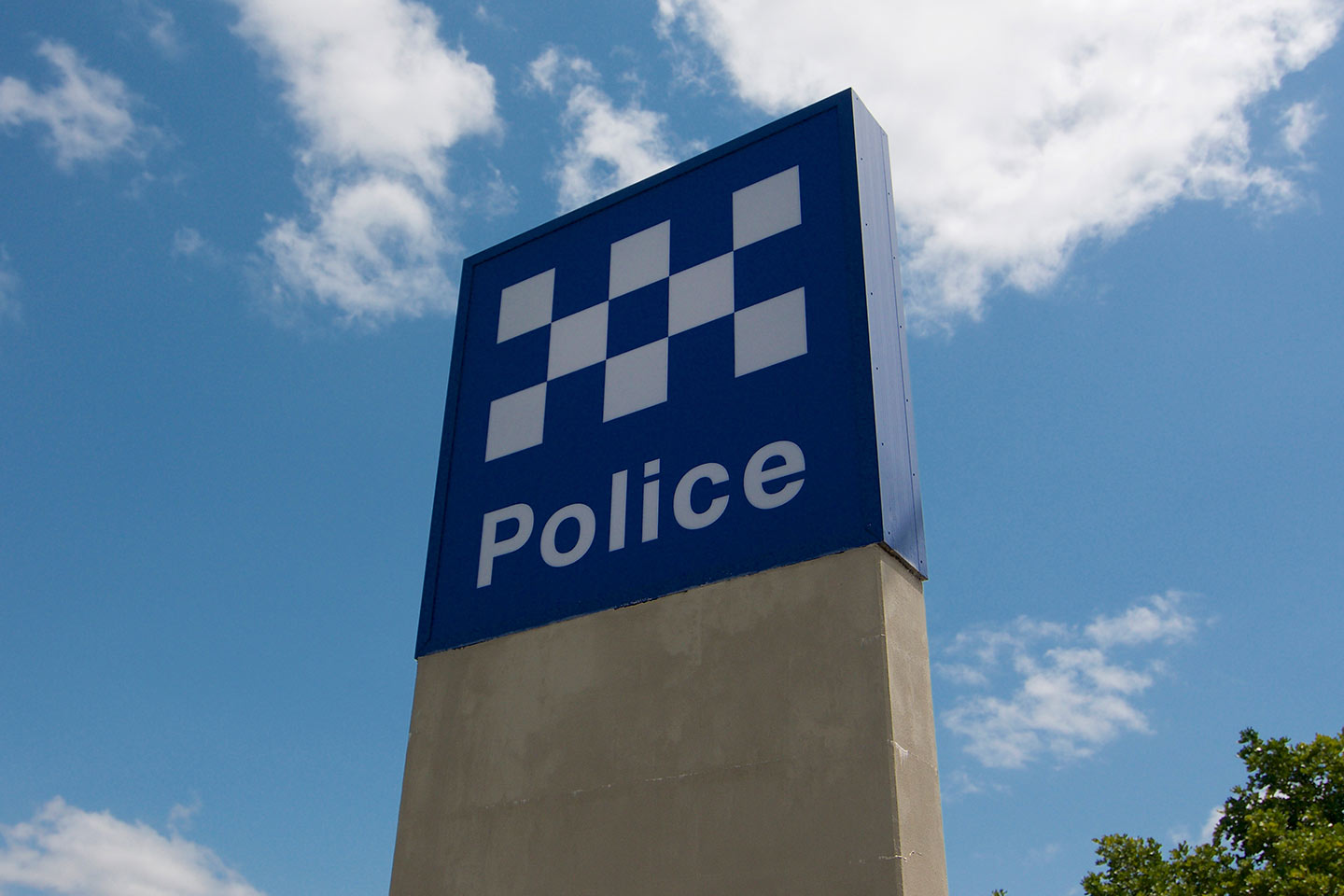
The senior officer in charge of the Queensland Police Service (QPS) response to elder abuse says there is often a ‘nexus between domestic and family violence and elder abuse’. Under the state’s legislation, he said, police must investigate complaints, and there are powers to protect people at risk of or experiencing elder abuse.
Inspector Bernie Quinlan, Manager of the Vulnerable Persons Group for the QPS, explained, ‘If there’s a relationship between parents and a child (or adult child), and there’s domestic and family violence occurring, we can actually make an application for a protection order under our legislation.’
State legislation covers elder abuse
Inspector Quinlan told Compass the state’s Domestic Family Violence Protection Act 2008 (DFVP Act) prohibits several types of behaviour.
‘It’s not just limited to physical abuse. It’s also controlling behaviour, so that’s intimidation and harassment that can occur between peoples.
‘So if those behaviours meet the definition of what’s domestic and family violence, police can apply on behalf of the person, whether the person consents or not. Or it can be done by a person through what’s called a “private application of the courthouse”, and that’s placed before a magistrate, and a protection order can be made.’
Inspector Quinlan said a protection order is a civil order. ‘They [the perpetrator] are basically ordered not to commit certain types of behaviour, so that coercive or controlling behaviour or financially abusive behaviour has to stop.
‘It’s a civil order, so by this you must be of good behaviour towards the other person, which means not to commit domestic and family violence. But if that order is breached, then it becomes a criminal offence.’
Coercive control is a criminal offence in Queensland, under laws that came into effect in May 2025. The crime carries a maximum penalty of 14 years in prison.
It is illegal for an adult to use abusive behaviours towards their current, or former, intimate partner, family member, or informal (unpaid) carer with the intention to control or coerce them.
—Queensland Government Coercive Control Laws webpage
In relation to cases of elder abuse, the DFVP Act definition of a ‘relevant relationship’ includes an intimate personal relationship, a family relationship and an informal care relationship.
Make contact, get help
‘Our underlying message: don’t be afraid to call police, because this behaviour is not on and it’s unacceptable,’ Inspector Quinlan said.
‘A number of police stations actually have embedded social workers from domestic family violence support services. So sitting in a police station now is a social worker from a domestic family violence service that can actually assist, right from the word go, speaking to people and supporting them.
‘Don’t be afraid to reach out for help, because help is available,’ Inspector Quinlan added. ‘If it’s not from the police, there’s the elder abuse hotline that can be contacted. There are support networks across the state for people who are suffering at the hands of a perpetrator, and everyone in the community – older Australians included – has the right to be safe and to feel safe.
‘People should feel confident to report to police and understand that their matters will be taken seriously and followed up and investigated.’
Police training on elder abuse
Inspector Quinlan said new recruits receive elder abuse education at the QPS Academy and throughout their first year of training. QPS has also been building up its resources to officers ‘to improve understanding of elder abuse and guide them through the investigative process’. Leadership and specialist courses ‘drill down into elder abuse, especially the nuances of investigations, the complexity and the support services in the community.
‘Elder abuse and family abuse is domestic and family violence, and as a police officer, that’s a core part of policing functions and responses into the community now. So, it takes up a significant part of our training and preparing people to go out on the road.’
What elder abuse can look like
Inspector Quinlan described some of the cases he has dealt with as ‘actually quite confronting and disturbing’.
‘I’ve seen unfortunate cases where elderly people have been confined, they have been manipulated. They’ve been psychologically abused. There’s been significant financial thefts. And again, it all comes back to the notion of power and control, the power over one person against another person in a relationship.
‘There are a number of factors that can have an impact,’ Inspector Quinlan told Compass. ‘We’ve seen family members coming back into a family home and then exploiting the person who has lived in a home for many years and taking over the home and treating it as their own. Abuse can come in many forms.
‘If there are medical issues that need treatment, they can be denied that treatment, or they can be denied medication, or they can be denied seeing their grandchildren who they’ve got relationships with.’
A State Parliamentary Committee inquiry was held into elder abuse in Queensland in 2025. In its submission to the inquiry, QPS said ‘the most widely recognised forms of abuse relate to physical, sexual, psychological or emotional abuse, financial and material abuse, abandonment, neglect, and serious loss of dignity and respect. Elder abuse often intersects with DFV [domestic and family violence] and can involve coercive control’.[i]
Elder abuse in Queensland
Inspector Quinlan said the data is ‘extremely difficult to get, but anecdotally, we are seeing increases in elder abuse’. In its briefing to the parliamentary inquiry, QPS reported a ‘small’ increase in victims of crime over 65. In 2022–23 there were 2,622 cases, and in 2023–24 there were 3,010. The crimes captured in this data ranged from homicide to extortion.
QPS cited statistics from the Queensland Elder Abuse Prevention Unit, which found ‘family relationships accounted for 95% of elder abuse cases in close or intimate relationships, with approximately three quarters reporting sons and daughters as the perpetrators’.[ii]
According to Inspector Quinlan, the biggest challenge is underreporting. Many older people ‘rely on their children for care, help and support’ and there are ‘relationships with children and grandchildren’.
‘We know that loneliness is a major issue with older Australians, and a lot of people don’t want to be lonely. They don’t want to lose that relationship with their family, so that’s something that we have to be aware of, and that in itself causes underreporting.’
Inspector Quinlan says the complexities are also heightened because ‘we are in the midst of an intergenerational transfer of wealth.
‘A lot of younger people are impatient and are trying to get their hands on the wealth from a previous generation. So that’s happening in the background, but it also presents challenges where an older person may intend to assist family members, or there might be loans which aren’t repaid.’
Other community assistance
Inspector Quinlan urged people to ‘to make use of the community resources that are available’ where possible as a first step. ‘Sometimes through mediation, issues around financial matters and housing arrangements have been able to be worked through.’
He said police work ‘quite closely’ with the Department of Families, Seniors, Disability Services and Child Safety; Caxton Legal Centre; Queensland Elder Abuse Prevention Unit; and ‘collaboratively’ with the Office of the Victims’ Commissioner, Queensland Public Trustee, Office of the Public Guardian and Queensland Health.
‘Coming up with a solution that protects everyone’s rights but actually sees improved information sharing is something that we’ll all be working towards improving,’ Inspector Quinlan told Compass.
Additional Queensland resources
Queensland Police Service and elder abuse
Queensland Police Service elder abuse brochure
Queensland Government and elder abuse
References
[i] Queensland Police Service (2025), ‘Inquiry into elder abuse: the Queensland Police Service departmental briefing for the Inquiry into Elder Abuse in Queensland’, The State of Queensland, p 8.
[ii] A Gillbard, ‘Elder abuse statistics in Queensland: year in review 2023–24’, UnitingCare, 2024, p 18.
All comments are moderated. Please visit our terms of use for guidance on how to engage with our community.